mart
MART Gallery & Studios – Providing Creative Platforms
Join our Newsletter

My Newsletter

Follow us

Search

HX Village Studios
  -    -  HX Village Studios

HX Village Studios

Our New Studios operate as an active collaborative approach, providing a supportive platform and opportunity as a means of showcasing and promoting cultural cooperation. We actively use methods of pooling resources and creative exchange to resource art, develop and build artistic and civic communities.
About the studios

The Building

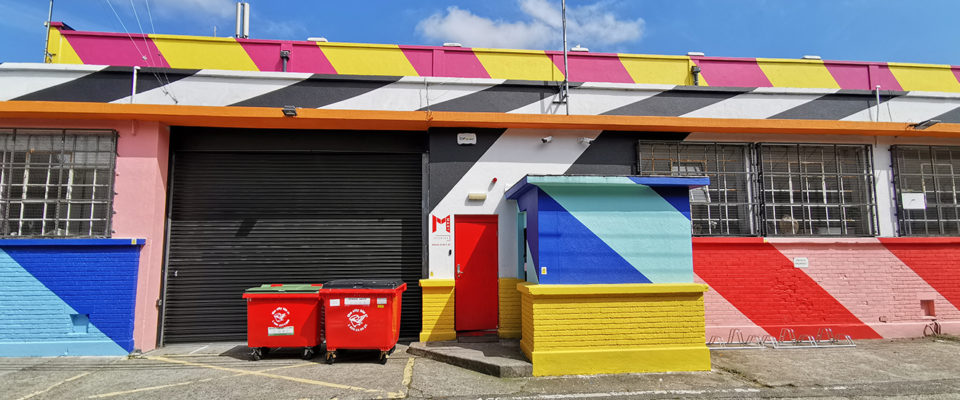
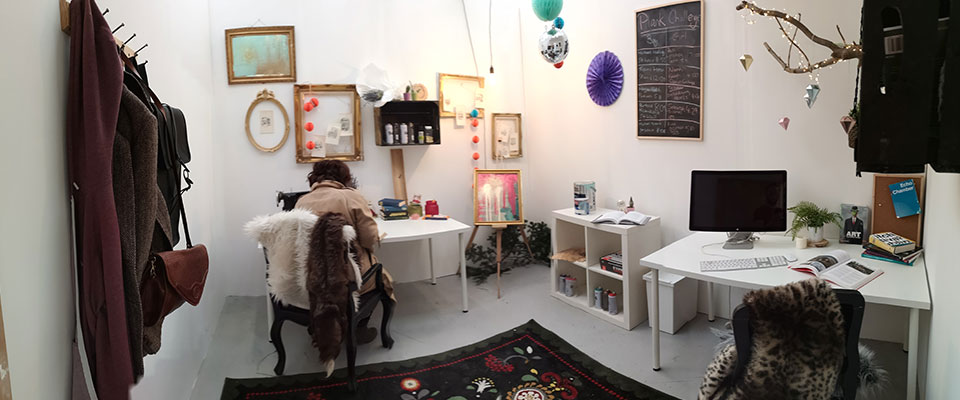
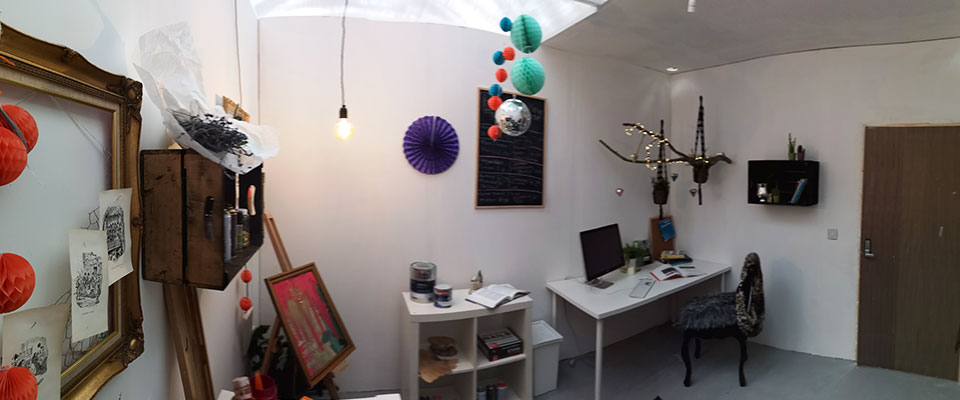
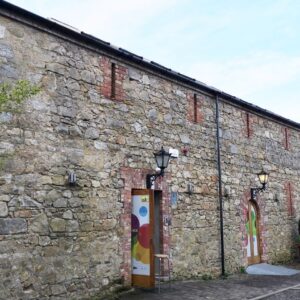
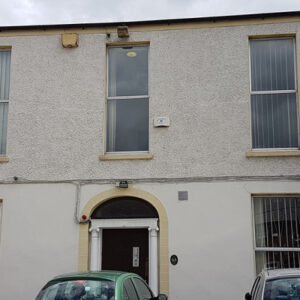
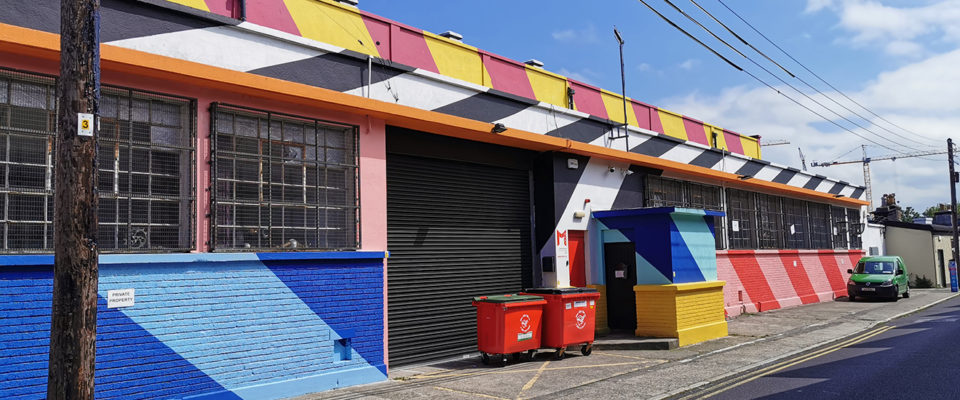
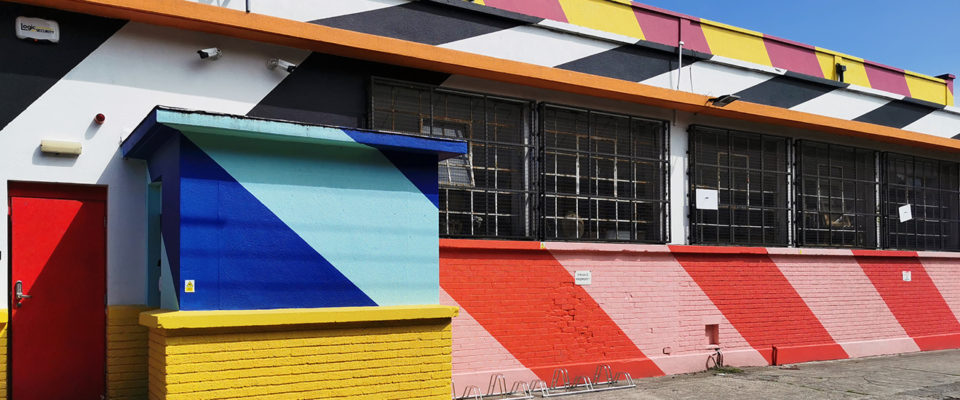
This is MART’s largest building, allowing the freedom to explore large and small scale projects. A secure building with a collection of small, medium and large studios hosting over 60 members.

Location

Harold’s Cross, a beautifully scenic stretch of the city that becomes a buzzing social hub in summer months. Located close to a range of cafes, bars and parks. Just a couple of minutes walk from Camden Street, and the city centre.

Transport

Lots of bus routes (9, 16, 16c, 49, 54a) and fifteen minutes walk from Dublin City Centre. Situated close to a Dublin bike station.
Location

Members

Visual Artist

SC Walsh

Filmmaker

Eoin Heaney

Visual Artist

Bob Campbell

Visual Artist

Gavan Duffy

Designer

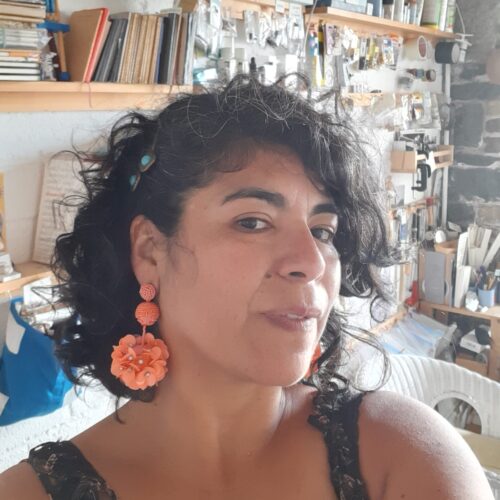
Georgina Diaz

Visual Artist

Billy Dante

Performance Artist

Angelica Santander

Visual Artist

Irene Uhlemann

Visual Artist

The Ljilja

Visual Artist

Jordan Holms 

Visual Artist

SC Walsh

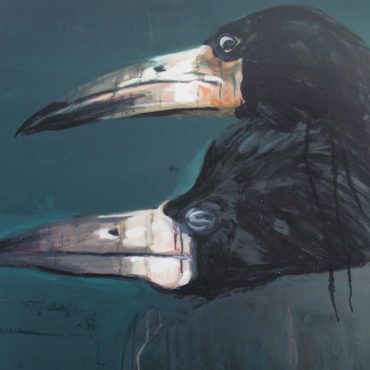
S.C.Walsh is an emerging artist best known for industrial dockland scenes, strong in composition, and contradictive in use of material, redefining the use of soft watercolour to depict hard industrial subject matter.

SC Walsh is interested in the ordinary, crafting semi abstract compositions recurring themes depicted in the artist’s work are docks, boats, city streets, rooftops, heavy machinary.

Walsh studied Painting in Galway with the artists Loughlan Hoare, Geraldine Quinn and Hugh Mc Cormack, and Printmaking with Siobhan Piercy and Declan Holloway. The artists work is influenced by the Technical processes employed in the Fine Art Lithography process. The strong compositions in the Artists pieces are reminiscent of Snapshot Photography.

Walsh’s close focus on subjects result in a tension between the representational and abstract.

Filmmaker

Eoin Heaney

Eoin is an award winning filmmaker. He writes and directs projects together with writer / producer Nora Windeck. They are Highly Stimulating Productions.

Visual Artist

Bob Campbell

“to find for each person those umbilical cords that put us in communication with other suns“

Roberto Matta

Visual Artist

Gavan Duffy

I am a trained artist and designer living in Dublin. My work is primarily the result of a need to paint. Though acrylic is my favourite medium, I also work with oils, gouache, metallic leaf, ink and charcoal. My ultimate goal is to seek feeling, and be unafraid to share what I find. In recent years my work has been mainly commissioned by private clients.

Designer

Georgina Diaz

Specialized in Historical Costumes for the Television and Film Industry, Georgina Diaz is a Fashion & Textile Designer from the NCAD in Dublin. Passionately interested in all History related subjects and particularly in the fashionable garments as material culture of any given period of time.

Visual Artist

Billy Dante

Billy Dante’s work explores the mirrored effect of art as life and life as art, fascinated by the spectacle and theatricality of every aspect of our existence. The work creates a primitive/ritualistic environment in the modern world, highlighting and observing aspects of everyday life to the extent that they become bigger then life. Through the blending of different points of reference, Dante’s practice develops a unique language of expression, in this the viewer feels lost and found all at the same time. The viewer picks up on moments of recognition, but these moments are fleeting and quickly dissolve into the hum of experience. As one grapples for meaning, they are placed outside of their comfort zone and therefore become open to broadened thoughts. The work speaks for the importance of forgotten languages as forms of expression, sounds that have lost their meaning but carry power like a mantra or prayer. The meaninglessness reflects the uselessness of art, taking reference from Oscar Wilde’s, A Picture of Dorian Gray, (‘the only excuse for making a useless thing is that one admires it intensely’). The work has an intensity that speaks for the empowerment of art, the ability to take simplicity (objects such as the telephone directory) and making them the source of profound feeling. Inspired by the great Irish literary figures Wilde, James Joyce and Samuel Beckett, this work intends to stand for art’s ability not to reflect or define the human condition, but once this work is experienced the viewer knows less about life and more about existence.

Performance Artist

Angelica Santander

I am a Clown originally from Chile and living in Ireland since 2002. I studied Acting in Chile and I continue with my development as an artist in Ireland completing a Technical theatre course 2005 and a master’s degree in Theatre studies in 2009. The same year I started working as a clown and in 2013 I started my training in the Pochinko Method, “clown through mask”, with Sue Morrison. This training revolutionised my understanding of the art of clowning and brought my practice towards a higher artistic level, its main principle is:

If we ever face all directions of ourselves at once we could only laugh at the beauty of our own ridiculousness.

Following this principle, I am interested in the creation of original work that reveals the essence of our humanity in a genuine and abandoned way, creations that speak and deal with themes that are relevant to our times. I want to connect with an audience and bring my personal experience in the performance of universal themes.
Furthermore, utilising theatrical and clown techniques I want to investigate and develop the interconnection between theatre, clown and Circus arts. I believe that Circus arts are the forefront of contemporaneous performance arts and that the general public is thirsty for more.


My work is based on the ethos of hard work, commitment, respect, consistency, discipline, free expression and fun.

Visual Artist

Irene Uhlemann

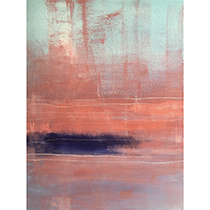
Primarily a painter Uhlemann also makes artists books. She frequently uses words as a springboard for ideas; the lyricism of poetry and the fluidity of paint and mark-marking complement each other.

Visual Artist

The Ljilja

The Ljilja is a visual artist born in Croatia. She made her first debut in 2006 and since then her art has been shown in group and solo shows. Her work range from installations and paintings to photography and performances.

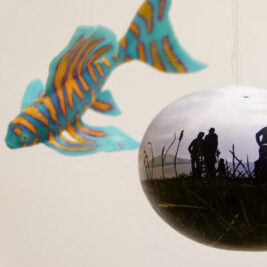
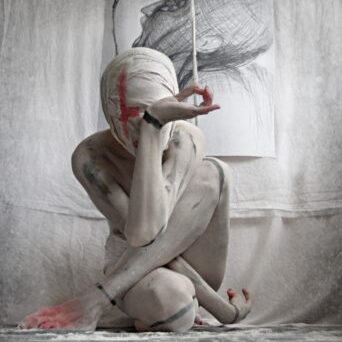
The Ljilja is an ongoing photography / ritual project . “As an artist my main aim is making the subconscious conscious, and bringing it to the light. We live in an era where most of us are showing the best part of ourselves, the most beautiful parts (a wonderful Kingdom of Selfies), and I am showing those, hidden, dark, disturbing parts. By covering my face and hiding my identity, I become no one; and by becoming no one, I have become everyone. By disfiguring my face, covering my eyes I am allowing my Primordial Self to step out from the darkness. I am reconnecting all over again with my true Self.” – says the Ljilja.

In her work Ljilja is in a constant search for selfless, content and Ego free body. Body that becomes. Bursting body. A body in which human soul live in a complete freedom stripped from all false teachings. A body which is “breaking down areas hardened by perspective of the Ego”. Primal body. Her work can be described as a transformation through creativity and connecting all over with her primal “I”.

Visual Artist

Jordan Holms 

MART Member Spotlight : Jordan Holms

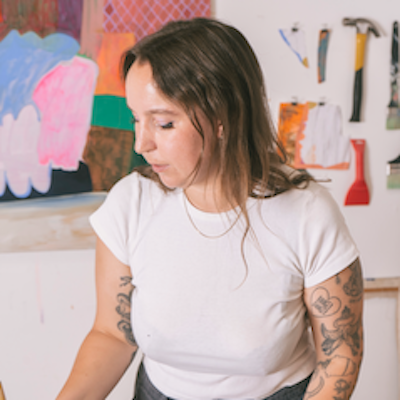
Jordan Holms is a multidisciplinary artist working in painting, textiles, and sculpture. With a keen sense for architecture and design, her practice considers how aesthetic ‘tastes’ are materialized, organized, and made to mean. Mining source materials from the built environment (both physical and online), Holms’s references range across commodity culture; from folk art, to flea markets, reality television, boutique ‘concept’ stores, and so-called aspirational design accounts on social media. Filtered through the lens of abstraction, her work interprets the things we find in our homes and in the built environment that signal something about how taste produces meaning. Holms constructs irreverent and errant spaces that index their own meanings in an attempt to make sense of what ‘having taste’ might look like in a moment wherein cultural trends are dictated by algorithms as well as elites.